Many skincare enthusiasts use both moisturizers and serums in their daily routines, but few know that how you apply them makes a significant difference. Using the wrong order or incompatible ingredients can reduce their effectiveness, and even cause irritation. That’s why learning how to layer moisturizer and serum correctly for maximum benefits is essential for anyone looking to optimize their skincare.
When applied in the right order and with the right spacing, moisturizer and serum can complement each other beautifully—hydrating, treating, and sealing in nourishment all at once.
Why Layering Matters
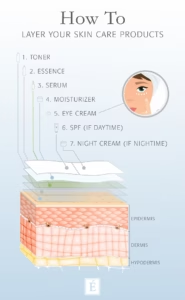
Your skin has a natural barrier that controls what penetrates and what stays on the surface. Serums are formulated with small molecules designed to reach deeper layers of the skin. Moisturizers, on the other hand, are usually thicker and work to lock in hydration. If you reverse their order, the heavier cream can block the serum from absorbing effectively.
That’s why the general rule is: apply serum first, then moisturizer. This ensures that active ingredients in the serum reach your skin, and the moisturizer helps seal everything in.
Start With a Clean Base
Before applying any product, wash your face with a gentle cleanser suitable for your skin type. Damp skin is more permeable, so applying serum while your skin is slightly moist can boost absorption. Avoid harsh exfoliants right before serum use, especially if your serum contains active ingredients like retinol or acids.
 Choosing the Right Serum
Not all serums are created equal. Depending on your goal—hydration, anti-aging, acne treatment, or brightening—different serums offer targeted results. For hydration, look for hyaluronic acid or glycerin. For uneven tone, niacinamide and vitamin C are effective. Sensitive skin types should avoid heavily fragranced serums or those with high concentrations of alcohol.
When looking for a complete product match, make sure your moisturizer and serum don’t have clashing ingredients. For instance, using a serum with strong actives like retinol may require a more soothing, barrier-supportive moisturizer.
Timing and Technique
After applying your serum, wait about 30–60 seconds before following up with moisturizer. This gives the product time to absorb. When applying the moisturizer, use gentle, upward strokes. You don’t need to press hard—just enough to evenly spread and seal in the serum.
LunaSkin’s full breakdown of moisturizer and serum layering explains the science behind absorption and compatibility, with product suggestions based on skin types.
Don’t Forget Skin Type Compatibility
Using the right products for your skin type is crucial. Oily skin may benefit from lightweight gels, while dry skin often needs richer, emollient-based moisturizers. If you’re unsure where to start, LunaSkin offers a practical guide on skincare routine for your skin type that helps you build the right base before you even get to layering.
Common Mistakes to Avoid
-
Skipping patch tests: Some serums, especially those with actives, may cause irritation if applied all over without testing.
-
Using too much: A pea-sized amount of serum and a nickel-sized amount of moisturizer are usually enough for the entire face.
-
Not adjusting for day vs. night: You may need different combinations for AM and PM routines.
Final Thoughts
Properly layering moisturizer and serum doesn’t take much time, but the payoff is long-lasting. Better absorption, less irritation, and visible results—all from just applying your products in the correct order. Stick to the basics, stay consistent, and let your skin do the rest.
